

Settlers carry out 277 attacks and 30 activities to seize more land
Ramallah, July 21, 2026
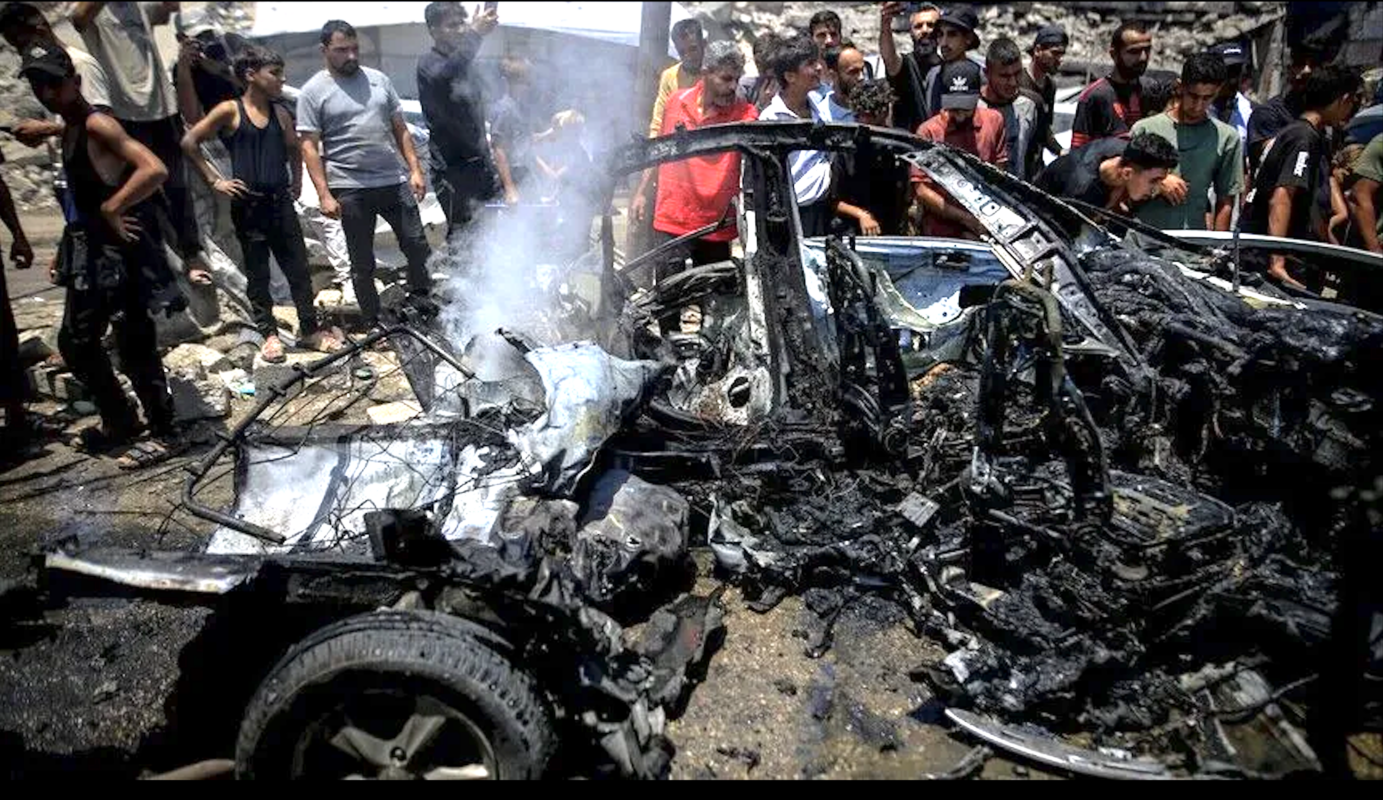
The OIC Media Observatory on Israeli Crimes against Palestinians documented 109 killings and 396 injuries between June 30 and July 20, 2026, across various Palestinian territories. The OIC Observatory recorded 102 killed in the Gaza Strip, the recovery of 16 bodies, and the confirmed kilings of 96 Palestinians, in addition to 348 injuries. Israeli occupation forces continued their bombardment of various areas in the Gaza Strip, along with the demolition of buildings in eastern Gaza.
The West Bank governorates were subjected to 882 incursions, during which Israeli occupation forces killed seven Palestinians, wounded 48 others, and arrested 375 over a 21-day period. The occupation forces demolished 20 homes, six commercial establishments, numerous animal pens and agricultural facilities, a water well, and a Bedouin encampment. They also bulldozed and uprooted trees in four areas of Jenin, Nablus, and Ramallah as well as uprooting of 40 trees in the village of Zububa in Jenin. they burned a house and occupied three. the forces burned agricultural lands and confiscated 16,577 dunams of land in the village of Dura al-Qar’a in Ramallah along with Land in the Silwan neighborhood of Al-Quds and 12,652 dunams in the town of Qusra were seized, all under the pretext of military purposes. The occupation forces also confiscated 3 vehicles, 2 bulldozers, and approximately $25,000 from Palestinian individuals.
Knesset member Tzipi Scott stormed the Dar Al-Aytam school in Al-Quds and smashed a sign with the Palestinian flag on it, while the occupation forces killed 4 children, injured 4 others, and arrested 7 children. Settlers also injured 5 children in direct targeting and running over operations.
Regarding attacks on mosques, the occupation authorities banned the Grand Mufti of Al-Quds and the Palestinian Territories, Muhammad Hussein, from entering the Al-Aqsa for a week, in addition to banning a journalist from the mosque. Occupation forces stormed the Qibli prayer hall in Al-Aqsa, forcing worshippers to leave. They also closed the gates leading to Al-Aqsa, prevented the call to prayer and the dawn prayer at the Ibrahimi Mosque in Hebron, restricted entry to the mosque, and prevented prayers there. Settlers stormed the area surrounding a mosque in the town of Beit Furik in Nablus, prevented the dawn call to prayer and the performance of prayers in the village of Husan in Bethlehem, forced worshippers to leave one of its mosques, and set fire to a mosque in the village of Al-Tuwani in Hebron.
Regarding settler attacks, during the aforementioned period, settlers carried out 277 attacks in which they released livestock into pastoral, agricultural and residential areas 43 times in nine different areas, and seized a soft drink kiosk, a wheat harvester, a bulldozer, two vehicles, a tractor, horses, seven tied sheep heads, electrical wires, iron poles, metal sheets, water tanks, house windows and doors, water wells, solar panels, a fence, and cell phones.
The settlers demolished two houses and a school after displacing the residents of Khirbet Yanoun al-Fouqa in Nablus. They destroyed 13 vehicles, surveillance cameras, windows of two houses, fences, and barbed wire. They burned lands in nine different areas, as well as three houses, a cafeteria, an agricultural tractor, three vehicles, and an agricultural irrigation pump. They also contaminated well water and killed a number of sheep.
Settlers uprooted 70 olive trees in the village of Deir Bzeigh, near Ramallah, in addition to uprooting undecumented trees in Salfit and Bethlehem, cutting tree branches in Hebron and Jenin, and damaging crops and greenhouses.
Regarding damage to water and electricity services, settlers damaged water tanks and irrigation networks in Tubas, Hebron, and Bethlehem, and caused power outages in 10 areas in Nablus, Bethlehem, Hebron, and Ramallah.
The number of settlement activities reached 30. During this period, the occupation autherities approved the establishment of the “Sa Nur East” settlement near the ruins of the evacuated “Sa Nur” settlement, and the construction of 450 settlement units in the Jabal al-Mukabber neighborhood of Jerusalem and the village of Sur Baher. they also issued a tender for a settlement project to build 342 settlement units.
Settlers fenced off three plots of land to establish settlement outposts. They also seized land in the town of Asira al-Shamaliya in Nablus, erected tents in villages in Ramallah, Nablus, Salfit, Hebron, and Ramallah, and added mobile homes and livestock pens to a settlement outpost in the Khan al-Ahmar area and in Wadi Qana in Salfit. The occupation forces bulldozed lands in the town of Dura in Hebron, and the village of Azmut in Nablus, with the aim of paving and expanding settlement roads, and lands in the village of Deir Qadis in Ramallah, to connect it to the “Nili” settlement, and lands in the town of Kafr ad-Dik in Salfit, with the aim of expanding the “Bruchin” settlement. Settlers also paved a settlement road in the village of Kafr Ni’ma, and carried out excavation and bulldozing work in lands in the village of Kafr Ni’ma in Ramallah, and the town of Kafr Ra’i in Jenin, and east of the town of Qusra in Nablus, and uprooted 500 olive trees, and bulldozed lands near the Al-Ma’azi Bedouin community in Jerusalem, and in the Khirbet al-Tawil area in Nablus to pave settlement roads, and south of the village of Burin, and uprooted olive trees, and carried out excavation and bulldozing operations near the Al-Tira neighborhood in Ramallah, and installed iron arches in the village of Yasid in Nablus, and established an agricultural room on a mountaintop in the village of Deir al-Hatab in Nablus, and seized water wells in Hebron.
The number of Israeli crimes during the aforementioned period amounted to 2980 crimes that affected various Palestinian areas.