

The daily average of Israeli crimes reaches 144, and the weekly total reaches 1,011
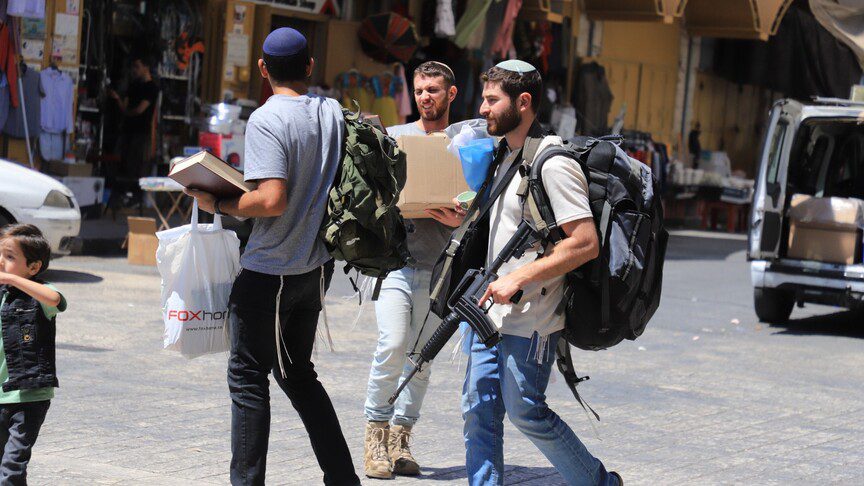
Photo: Anadolu Agency
Ramallah, April 28, 2026
Israel continued its bombardment of the Gaza Strip, killing 824 Palestinians between October 11, 2025 (the date of the ceasefire agreement) and April 27, 2026, and wounding 2,318. The OIC Media Observatory on Israeli Crimes Against Palestinians documented the killing of 47 Palestinians by Israeli forces during the period from April 21 to 27, 2026. This included 40 in the Gaza Strip (one body was recovered), six in the West Bank, 104 injured the Gaza Strip, and also 17 in the West Bank.
In the Gaza Strip, the occupation forces bombed various areas, including the Sheikh Nasser neighborhood, the Al-Mawasi area, the Turkish slaughterhouse area in Khan Yunis, Beit Lahia, the Beit Lahia town project, the Al-Tuffah neighborhood, Jabalia town, the Sheikh Radwan neighborhood, and the Al-Maghazi camp, in addition to places near Kamal Adwan Hospital. The Israeli occupation forces also carried out numerous demolition operations after expanding the “yellow line” in Gaza City.
In the West Bank, the occupation forces carried out 306 raids. They arrested 170 Palestinians, demolished 5 houses and 3 barns, occupied a house and turned it into a military barracks, confiscated two vehicles and a motorcycle, bulldozed lands in 3 villages in Nablus and Bethlehem, uprooted trees, and destroyed a water network.
Children were not spared from the occupation’s crimes. They killed one child, injured two, arrested five, and assaulted another. Settlers killed two children, one while he was riding his bicycle in Hebron and the other at a school in the village of Al-Mughayyir. Settlers also assaulted four other children in different locations, attacked the Al-Mughayyir school in Ramallah, and an armed settler was present near the girls’ secondary school in the village of Mikhmas. Israeli forces prevented high school students from reaching their schools in Masafer Yatta. They also raided Palestine Technical University and detained a number of students.
Regarding violations of religious sites, the occupation authorities prevented the call to prayer for Isha from being broadcast on the external speakers of the blessed Al-Aqsa Mosque amidst almost daily incursions into Al-Aqsa and the Ibrahimi Mosque in Hebron, where the occupation authorities also prevented the call to prayer from being broadcast for two days under the pretext of “Jewish holidays.” They also raised the israeli flags on its roof and installed lights and sound platforms above it. Settlers stormed the Bab al-Rahma cemetery adjacent to the wall of Al-Aqsa and performed “Talmudic” rituals.
The number of settler attacks on towns and villages in the West Bank reached 113 attacks during the aforementioned period. These included releasing livestock 14 times in agricultural, grazing, and residential lands in six Palestinian governorates, smashing the glass and parts of dozens of vehicles, a water meter, the contents of a house, a shed, a pen, and a fence, burning 4 cars and parts of two houses, demolishing the Al-Malih Basic School and the surrounding Bedouin dwellings in the Al-Malih Bedouin community in Tubas after displacing its residents, bulldozing a water reservoir that supplies an entire village, bulldozing agricultural lands, stealing a car, a tractor, industrial equipment, fodder, and sheep, cutting down and uprooting 440 trees in Nablus and Ramallah, in addition to an undocumented number of trees in Beit Sahour and Kafr ad-Dik, damaging prickly pear trees in Hebron, and cutting the branches of approximately 200 trees in the villages of Nablus, Qalqilya, and Ramallah.
Over a seven-day period, nine settlement activities took place. During these activities, Israeli occupation forces bulldozed land to construct a security wall around the settlement of Givat Hadasha, as well as land adjacent to the separation wall, for settlement projects. They also bulldozed land north of Salfit, near the fence of the Ariel settlement. An order was issued to confiscate 70,000 square meters of archaeological land in the town of Kafr ad-Dik for settlement projects. Furthermore, a plan was approved to construct a Haredi (ultra-Orthodox) yeshiva (religious school) in an 11-story building covering approximately 5,000 square meters at the entrance to the Sheikh Jarrah neighborhood in Jerusalem. Water pipes were also destroyed east of the town of Tammun while bulldozing land to construct a settlement road.
Settlers fenced off land in the Al-Hamma area of Tubas, cut off water pipes supplying residents’ homes, and fenced off land in the Umm Al-Abar area of Tubas. They also erected a tent south of the village of Kisan and raised the occupation flags on it, bringing the total number of crimes committed by the occupation and settlers together in various Palestinian areas to 1,011 in seven days.