

Photo from WAFA News Agency
Ramallah, April 7, 2026
Israeli occupation forces committed a massacre in the Maghazi camp in the central Gaza Strip, as part of their ongoing violations of the ceasefire agreement. The bombing, which took place between March 31 and April 6, 2026, targeted areas in the central, northern, and southern Gaza Strip, including areas in Khan Younis, the displaced persons camp in Al-Mawasi, the northern part of Rafah city, the Zeitoun neighborhood, the Sheikh Radwan neighborhood, and the Nuseirat camp. In addition, homes east of Khan Younis were demolished. Warnings were also issued in the Gaza Strip about the outbreak of epidemic diseases due to the spread of rodents as a result of the presence of piles of untreated waste and the lack of means to dispose of it.
The OIC Media Observatory on Israeli Crimes Against Palestinians recorded 23 Palestinians killed and 100 injured by the Israeli occupation between March 31 and April 6, 2026. Of these, 19 were killed by direct fire from Israeli occupation forces in the Gaza Strip, in addition to the recovery of three bodies from the rubble, and 76 others were injured. In the West Bank, one person was killed, and 24 were injured. This brings the total number of Palestinians killed by the Israeli occupation forces between October 7, 2023, and April 6, 2026, to 73,445, and 182,657 injured. The number of Israeli crimes in the Palestinian territories during this period reached 1,272.
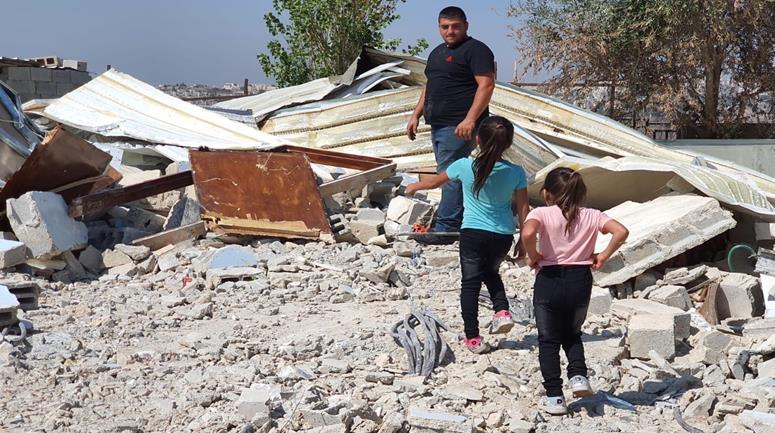
Israeli occupation forces raided cities and villages in the West Bank 488 times over the course of a week, arresting 147 Palestinians. They demolished six homes in Al-Quds (Jerusalem), parts of another home, seven commercial warehouses, two poultry farms, and a livestock pen. They also burned a house, evacuated a gas station, occupied another house, uprooted hundreds of olive trees in various areas, and confiscated two vehicles, $23,000 from several individuals, and gold jewelry.
Attacks on places of worship continued, with Israeli forces closing the Al-Aqsa Mosque compound for the 37th consecutive day. The Al-Quds (Jerusalem) Governorate reported that 2026 saw seven documented attempts to bring animal sacrifices into Al-Aqsa, the highest number recorded since 1967. Settlers attacked the Bab al-Rahma cemetery adjacent to the Al-Aqsa Mosque, and Israeli forces arrested a Palestinian man at one of the mosque’s gates. The Ibrahimi Mosque in Hebron and the Church of the Holy Sepulchre in Al-Quds (Jerusalem) remained closed.
Israeli occupation forces continued their attacks on children, injuring five and arresting three others. They stormed UNRWA schools in the Shuafat refugee camp in Al-Quds (Jerusalem), conducting searches and taking architectural measurements of the buildings. They also raided the area surrounding the Arab American University near the town of Zababdeh in Jenin, storming and searching several student dormitories. Settlers stormed the mixed-gender elementary school in the village of Jit.
Israeli forces imposed a curfew on neighborhoods in the Old City of Hebron to facilitate settler occupancy. They also attacked medical personnel and ambulances in Nablus. Settlers launched 98 attacks on Palestinian villages, releasing their livestock on 17 occasions in six Palestinian governorates. They stole solar panels, three purebred Arabian horses, five sheep, and belongings from inside tents, pens, and grazing equipment. They also removed the gate of a spring near the town of Qusra in Nablus to gain access to it. Settlers burned and destroyed two poultry farms and a truck transporting chickens in Nablus, as well as an agricultural tractor, a cement mixer, seven vehicles, tents, and household furniture in the town of Beita in Nablus. They damaged an electrical transformer, cut power lines supplying villages in Qalqilya, and damaged an irrigation network. They demolished greenhouses, uprooted and cut olive tree branches in six different areas, and destroyed crops in Tubas.
The total number of settlement activities over the course of seven days reached 15. In a clear targeting of Bedouin communities and their grazing environment, the occupation authorities announced a detailed plan targeting 170,000 square meters of Bedouin land in Abu Dis, Al-Quds (Jerusalem), for settlement purposes. Settlers established an outpost between the villages of Tayasir and al-Aqaba in Tubas, while others erected tents in the Wadi al-Sha’ir area, the village of Aboud, and the village of Abu Najim, before they were dismantled by the occupation forces. They also re-erected a tent in the town of Jannata, Bethlehem (for the second time), in an attempt to establish another outpost.
Settlers paved two settlement roads, one leading to the Havat Gilad settlement and the other east of the village of Kisan. They also erected a fence around land in the northern Jordan Valley and mobile homes in the town of Bani Na’im, Hebron, with the aim of expanding the Mitzpe Ziv settlement outpost. They constructed a wooden room east of Salfit and occupied a farm in the Bedouin area of Salfit. The occupation forces bulldozed agricultural lands in the town of Furik, adjacent to the settlement of “Itamar,” in order to expand the latter, and confiscated areas of agricultural lands along an area between the villages of Za’tara and Al-Sawiya, for the benefit of extending a settlement water line in the area.