

Attacks on 14 children in the West Bank and the killing of 67 others in Gaza since the ceasefire
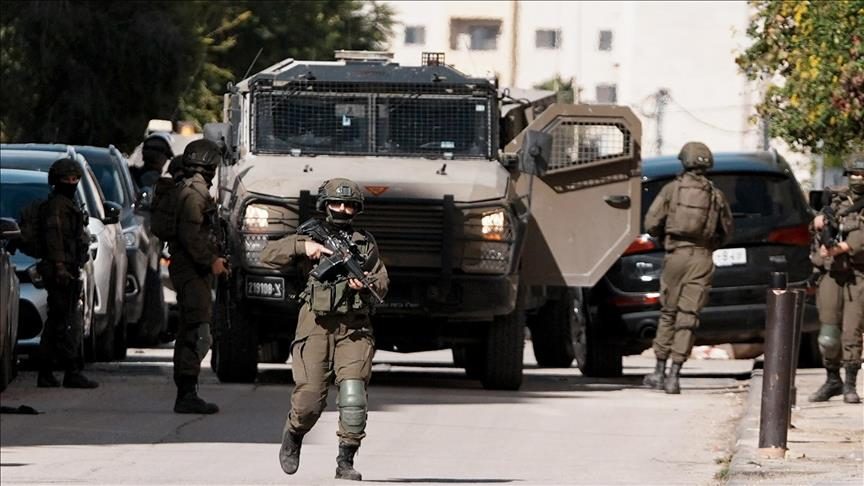
During an incursion by Israeli occupation forces into Palestinian territory. Archive photo. Palestinian News & Information Agency (WAFA).
Ramallah, December 23, 2025
The cumulative killing toll of Palestinians between October 7, 2023, and December 22, 2025, reached 72,044, in addition to 180,486 injured across the Palestinian areas. The OIC Media Observatory on Israeli Crimes Against Palestinians recorded a cumulative killing toll of 276 and 78 injuries between December 16 and 22, 2025. The OIC Observatory classified this as 14 murders and 47 injuries committed by Israeli occupation forces in the Gaza Strip within a single week, in addition to the recovery of 15 bodies and the confirmation of the murder of 243 others. The toll in the West Bank was 4 murdered by the Israeli occupation and 31 injuries.
In the Gaza Strip, Israeli occupation forces destroyed two residential towers, bombed the Al-Samar intersection in Gaza City, and damaged a school sheltering displaced people in the Al-Tuffah neighborhood. They also intensified the bombing of the eastern areas of the Gaza Strip, where the number of children killed since the ceasefire has reached 67.
Amid dire humanitarian conditions, 17 Palestinians, including four children, died from the extreme cold in the Gaza Strip, and the United Nations confirmed that 55,000 families were affected by the recent heavy rains. Meanwhile, the World Health Organization confirmed that 1,092 Palestinians have died since 2024 due to Israel’s continued refusal to allow medical evacuations and warned of an imminent health collapse in Gaza.
A UN report stated that most of the population of the Gaza Strip suffers from food insecurity, while the occupying forces continue to impose restrictions on the entry of food, fuel, medicine, and mobile homes.
The total number of raids by the occupation forces on Palestinian cities and villages during the aforementioned period amounted to 336 raids, during which they arrested 165 Palestinians, and demolished 17 houses, a horse stable, a car wash, a barn, a container, and two water ponds for agricultural purposes.
Among the demolished houses was a residential building in the Silwan neighborhood of Jerusalem, containing 13 apartments inhabited by about 100 people. This is part of an Israeli policy targeting the Silwan neighborhood, where the occupation authorities seized a Palestinian house and allocated it to settlers, and closed the “Noor Al-Quds” schools and kindergartens there, under the pretext of disturbing the settlers, and forced its students to move to other schools without obtaining the approval of the parents.
The occupation forces killed one Palestinian child, injured eight others, and arrested four children during the week. Settlers also killed a child in Bethlehem and attacked school students in the town of Yatta in Hebron. A report issued by the Commission of Detainees and Ex-Detainees Affairs stated that the number of children arrested by the occupation forces reached 1,650.
The report confirmed that the number of Palestinian detainees and prisoners in Israeli prisons is 9,300, not including those held in Israeli military camps.
Israeli forces confiscated agricultural land in the village of Atouf, near Ramallah, to construct a road for military purposes. They also confiscated gold jewelry from Palestinians in Jerusalem and surrounded the mosque in the village of Husan, near Bethlehem, locking the worshippers inside.
In just seven days, settlers carried out 62 attacks against Palestinians. These attacks included cutting off electricity to a house in the northern Jordan Valley, setting fire to two vehicles and agricultural land in the village of Burqa near Ramallah, grazing livestock in olive and grape groves in the village of Duma, stealing a water tanker and a tractor in Tubas, and, under the protection of Israeli occupation forces, storming the town of Kafr Haris in Salfit, where they performed Talmudic rituals at a religious site. They also broke into homes and damaged water meters in several houses.
In a single week, 13 settlement activities took place, during which the Israeli government approved the construction of 19 new settlements in the central and northern West Bank, as well as in Bethlehem, the northern Jordan Valley, and Hebron. The occupation forces issued an order to confiscate 530 dunams of land in the Jenin area to construct a settler road. They also bulldozed land between the town of Aqraba and the village of Jurish, placing mobile homes to expand a settlement outpost there and in the village of Shuqba near Ramallah. Additionally, they erected tents in Khirbet al-Daba’, bulldozed 35 dunams of land, and uprooted 400 ancient olive trees in the village of Budrus near Ramallah. Furthermore, they destroyed agricultural land, a livestock pen, and greenhouses in the town of Jayyous, and dozens of dunams north of the village of Yasuf in Salfit to expand the Kfar Tapuach settlement. Settlers also carried out bulldozing and construction work on land belonging to the village of Khala’il al-Luz in Bethlehem and the village of Sarta in Salfit, with the aim of expanding settlement outposts. Settlers also plowed land in the town of Deir Dibwan near Ramallah with the intention of cultivating and seizing it.
Thus, the number of Israeli crimes of various types, during the aforementioned period, reached 1189 crimes in one week, which varied between occupied Al-Quds (Jerusalem), the West Bank, and the Gaza Strip.