

Israeli settlers intensify their attacks on Bedouin communities in the West Bank
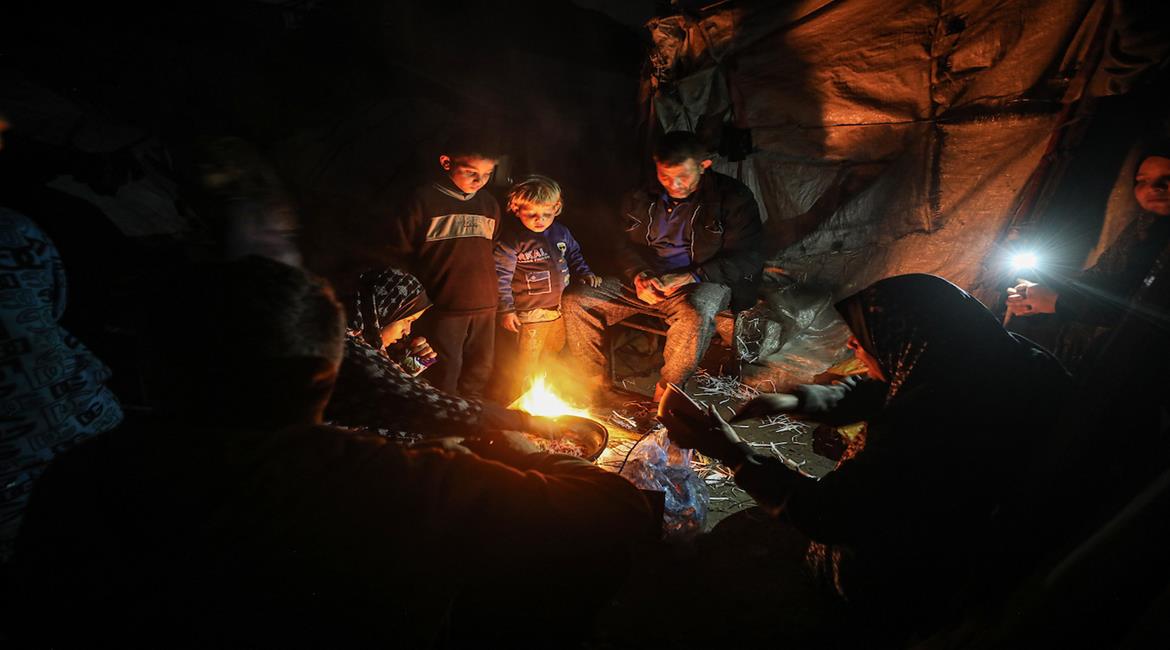
Palestinians endure cold winter nights in the Gaza Strip. Photo by WAFA News Agency
Ramallah, January 20, 2026
Despite ongoing international efforts to solidify the ceasefire agreement in the Gaza Strip and implement its stipulated phases, Israeli occupation forces continue to violate the agreement by bombing various areas in the Strip and demolishing numerous buildings. The Media Observatory of the Organization of Islamic Cooperation (OIC) documented Israeli crimes against Palestinians between January 13 and 19, 2026, including the bombing of northern and southern Gaza by Israeli forces from land and air, as well as the bombing of Khan Younis, the Zeitoun neighborhood, al-Mawasi, and Deir al-Balah, in addition to the demolition of buildings in Rafah.
The Observatory documented the weekly toll of 132 deaths in various Palestinian areas, including 23 killed by the occupation forces in the Gaza Strip, in addition to the recovery of 16 bodies and the confirmation of 92 killed that occurred during the Israeli aggression on the Gaza Strip, as well as 47 others who were injured by the occupation forces.
The number of Palestinian killed from October 7, 2023, to January 19, 2026, reached 72,633, with 180,736 injured. The Palestinian Ministry of Health confirmed the killing of one hundred Palestinian children since the ceasefire in the Gaza Strip.
The OIC Observatory reported the suffering of Palestinians in the Gaza Strip due to the bitter cold, rain, and strong winds, which uprooted many tents during the fourth wave of rain, in addition to flooding others. The past seven days also saw a number of deaths due to the extreme cold. In the West Bank, the number of killed in one week reached one child, and the number of injured was 15, including three children. The Israeli occupation forces carried out 337 raids, during which they arrested 172 Palestinians, including 13 children and one journalist. The occupation forces also detained two girls and three women, demolished 5 houses, occupied two houses and evicted their residents and turned them into two military barracks, bulldozed land planted with olive trees under the pretext that it was close to the apartheid wall in Jerusalem, ordered the removal of olive trees from large areas and bulldozed a street in the vicinity of Ramallah, filled in two water wells and a water pond for agricultural purposes in Hebron, and prevented an ambulance from passing through while it was heading to rescue those in Ein Sinya.
Regarding violations at the Al-Aqsa Mosque and the Ibrahimi Mosque, Israeli Minister of Public Security Itamar Ben-Gvir, accompanied by a number of Israeli extremists, desecrated the Al-Aqsa Mosque compound. Meanwhile, Israeli soldiers and settlers stormed the Ibrahimi Mosque, expelling worshippers and mosque staff from the Isaac Hall and removing the mosque’s director and head of its trustees. Israeli forces also raided the UNRWA Jerusalem Health Center and closed it for a month.
In a single week, settlers carried out 77 attacks, intensifying their assaults on Bedouin communities. They attacked the Al-Sidra Bedouin community near the village of Mikhmas, burning eight homes and two vehicles. They also fired indiscriminately at residents and severely beat two Palestinians, one of whom was a woman. Two international solidarity activists were also attacked and injured, requiring hospitalization. Eight Bedouin families from the Shalal al-Auja community were forced to dismantle their homes and leave the community due to settler attacks. Furthermore, the extremist Israeli Knesset member, Tzvi Sukut, stormed the community and attacked international peace activists who were showing solidarity with the Bedouin families. Settlers also raided Palestinian homes in the Tubas area, destroying property, and looted the contents of another home in Masafer Yatta.
Settlers grazed their livestock in 10 different Palestinian locations. One settler removed the gate and fence of farmland in the town of Atara and grazed his livestock there. Settlers also bulldozed and vandalized agricultural land in the Bethlehem area, cut power lines supplying the village of Duma, severed water lines supplying the residents of the village of Al-Maniya, attacked groundwater wells in Al-Mughayyir, smashing windows, doors, and control panels, and cutting the control cables connecting the wells, causing them to stop pumping. They also seized a water tanker in Jericho and uprooted and cut down olive trees and tree branches in the village of Khirbet Yarza in Tubas.
The number of settlement activities during the aforementioned period reached nine included the confiscation of land in the Silwan neighborhood of Jerusalem for the construction of gardens and parking lots for settlers, and the paving of a road leading to a settlement outpost in Tubas. Settlers also began paving a road northeast of the village of Madama, planted trees near homes in the Bedouin community of Shakara in the village of Duma, and fenced off land in the same village. Israeli occupation forces also bulldozed land west of Salfit to expand a settlement outpost and pave roads in the area, in addition to carrying out bulldozing work north of the town of Qusra. Settlers placed mobile homes to establish a settlement outpost and erected five mobile homes to expand another settlement outpost in Beit Sahour, Bethlehem. The total number of crimes committed by Israeli occupation forces and settlers in a single week reached 1,012 across various Palestinian areas.