


The Israeli occupation demolished 101 houses and pastoral settlement activity increased in the West Bank in 2025
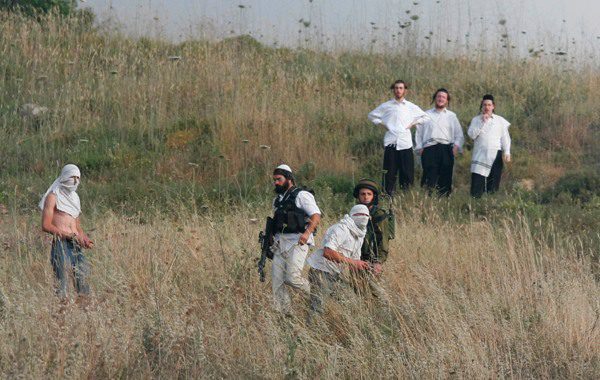
Israeli Settlers Attack Agricultural lands in the West Bank. Archive photo, WAFA News Agency.
Ramallah, January 6, 2026
The OIC Media Observatory on Israeli Crimes Against Palestinians recorded the number of Palestinians killed between December 30, 2025, and January 5, 2026, totaling 124 across various Palestinian territories. This figure includes the killing of 8 Palestinians in the Gaza Strip by direct fire from Israeli occupation forces, the recovery of the bodies of 4 others, and the confirmed killed of 110 more. Additionally, 55 Palestinians were injured in ongoing violations of the ceasefire agreement by Israeli occupation forces. The OIC Observatory also recorded the killing of 2 Palestinians in the West Bank and the injuring of 24 others. The total number of Palestinians killed between October 7, 2023, and January 5, 2026, stands at 72,496, with 180,604 injured.
The Israeli occupation forces have not ceased their crimes. The Palestinian Ministry of Health announced the killing of 422 Palestinians since the ceasefire in the Gaza Strip. The OIC Observatory documented artillery and airstrikes in Beit Lahia, Shuja’iyya, Rafah, and Tuffah, where more buildings were demolished.
The suffering of displaced people in the Gaza Strip has intensified as they endure the third storm, bringing cold and rain, amidst a shortage of tents and the fact that many are not waterproof. This has exacerbated the already dire living conditions for the residents of the Strip.
In the West Bank and occupied Jerusalem, Al-Quds, the OIC Observatory recorded the continued violation of the sanctity of the blessed Al-Aqsa Mosque on an almost daily basis by Israeli extremists. Meanwhile, cities and villages in the West Bank were subjected to 364 raids, some of which included the demolition of 100 homes in the Nur Shams camp in Tulkarm, and another home in Al-Quds. The occupation forces also arrested 228 Palestinians during their raids in one week, confiscated an excavator in the vicinity of Salfit, blocked an artesian well in Ramallah, and confiscated 800 Jordanian dinars from a Palestinian in Bethlehem.
Regarding attacks on Palestinian children, Israeli occupation forces killed a girl in the Gaza Strip and injured three children in the West Bank. Settlers also injured a child in Bethlehem, and during a raid on the town of Beit Fajjar, Israeli forces removed the gate of the town’s secondary school.
In seven days, settlers carried out 62 attacks on various cities and villages in the West Bank. During these attacks, settlers damaged several homes in the Al-Quds area, a vehicle belonging to a foreign solidarity activist, destroyed solar panels and spotlights, uprooted olive trees, cut branches off other trees, stole a wood-burning stove, vandalized an agricultural greenhouse, stole a mobile phone and spotlights, looted two barns before demolishing them in the Hebron area, and damaged irrigation lines in the Nablus area. In addition, there were two settlement activities during the past seven days, including settlers plowing two agricultural lands in the Al-Auja waterfall area in Jericho and in the Umm al-Jamal area in the northern Jordan Valley with the intention of seizing them.
The number of Israeli crimes, as documented in the report, reached 1,049 across various areas of occupied Palestine.
According to a report issued by the OIC’s representative office in Ramallah, 2025 witnessed a surge in “pastoral settlements” following the establishment of 100 new settlement pastoral outposts in various parts of the West Bank. This was accompanied by attacks on Palestinians, the theft of their livestock, the grazing of livestock on Palestinian land, and the forced displacement of others from their homes.
Ramallah Governorate was the biggest victim of settler attacks, witnessing 1,178 attacks in one year, followed by Nablus Governorate with 1,128 attacks, then Hebron with 1,097, Tubas with 418, Salfit with 412, followed by Jericho with 350 attacks, Bethlehem with 315, Qalqilya with 143, Tulkarm with 84, and finally Jenin with 60 attacks, according to what was documented by eyewitnesses, NGOs and activists, apart from those attacks that could not be documented.